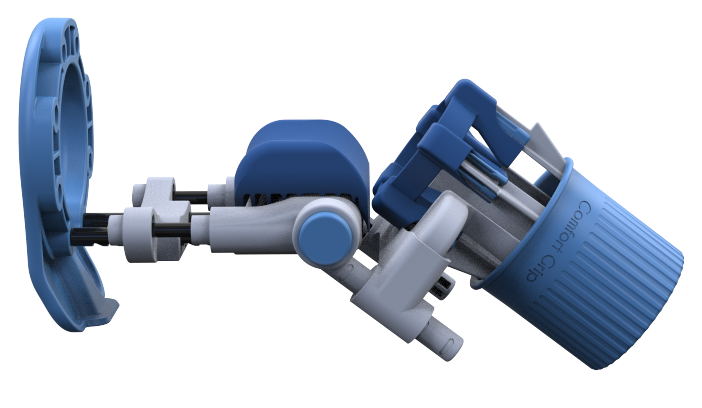
The Comfort Grip Explained
What problem does it solve?
Clamp discomfort, slipping, sticky tape, awkward setup.
Who is it for?
Men already using a compatible traction therapy device.
What does it not do?
It does not diagnose Peyronie’s, treat Peyronie’s by itself, replace medical advice, or replace the traction device.
What makes it different?
Designed by someone with lived experience plus engineering/product design expertise.
If you have recently noticed that your penis bends or curves when erect, it can feel worrying, embarrassing or difficult to talk about. Some men first notice a bend during an erection. Others notice discomfort, shortening, narrowing, a lump, or a change in how the penis feels.
A new bend or change should always be discussed with a GP, urologist or suitably qualified medical professional. This page is not here to diagnose you. It is here to explain, in simple terms, why some men come across the phrase Peyronie’s disease, what penile traction therapy means, and why comfort can matter when using a traction device.
Comfort Grip is not a treatment for Peyronie’s disease. It is an independent comfort accessory designed to help men who are already using a compatible penile traction therapy device.
What is Peyronie’s disease?
Peyronie’s disease is a condition that can cause the penis to curve when erect. Some men may also experience pain, a lump or hard area, shortening, narrowing, or difficulty with erections.
The important first step is not to panic and not to self-diagnose. If the change is new, painful, worsening, or causing concern, speak to your GP or urologist.
Medical advice is especially important if you have:
- a new or worsening bend when erect
- pain during erections
- a hard lump or plaque
- narrowing or shortening
- difficulty with erections
- distress or worry about the change
A medical professional can help you understand what is happening and whether any treatment or monitoring is appropriate.
What is penile traction therapy?
Penile traction therapy involves using a traction device for a set period of time, usually as advised by a doctor, urologist or device instructions. Some men are advised to use traction therapy as part of their Peyronie’s disease management.
The challenge many men face is not simply understanding the device. It is using it consistently, correctly and comfortably enough to keep going.
Some men find traction therapy difficult because of:
- clamp discomfort
- pressure or pinching
- slipping during use
- awkward setup
- sticky bandages, pads or wraps
- time spent preparing the device
- frustration when trying to use the device regularly
When something is uncomfortable or difficult to set up, it can become harder to use as directed.
Why comfort matters
Traction therapy often requires patience, privacy and routine. If a man finds the process painful, awkward or unreliable, he may feel discouraged. I know I did!
The Comfort Grip was created because of this exact problem.
After being diagnosed with Peyronie’s disease, I experienced the frustration of trying to use traction therapy while dealing with discomfort, slipping and difficult preparation. As an engineer and product designer, I began developing a practical accessory to make the process more manageable.
The Comfort Grip was designed to help with the comfort and usability of compatible traction therapy devices. It does not replace the device itself. It does not diagnose, treat or cure Peyronie’s disease. It is intended as a supportive accessory for men who are already using a compatible traction device.
How The Comfort Grip may help
The Comfort Grip has been designed to make traction therapy feel simpler, more secure and more comfortable for men using a compatible device.
It may help by:
- reducing the need for sticky tape or makeshift padding
- making setup quicker and easier
- improving grip and security during use
- helping the device feel more manageable
- supporting a more consistent routine
Every man’s experience is different, and the Comfort Grip is not a substitute for medical advice or the original device instructions. Always follow the guidance given by your clinician and the manufacturer of your traction therapy device.
Designed from lived experience
The Comfort Grip was created in the UK by myself. I developed the product after my own experience of Peyronie’s disease and traction therapy.
With a background in toolmaking, product design, injection moulding, mechanical engineering and manufacturing, I used my own experience to design a practical accessory for a very personal problem.
The aim was simple: to make traction therapy easier, quicker and more comfortable for men who were already trying to use a compatible device.
Check compatibility before ordering
The Comfort Grip is not suitable for every traction therapy device.
Before placing an order, please check that your device is compatible. If you are unsure, contact me before purchasing and I will do my best to help.
The Comfort Grip is an independent accessory. It is not manufactured by, endorsed by, sponsored by or affiliated with any traction therapy device manufacturer.
A discreet product for a private concern
I understand that Peyronie’s disease and traction therapy can feel very private. Many men do not want to talk about it openly, and many spend time searching online before they feel ready to speak to anyone.
The Comfort Grip exists because this is a real issue that many men experience quietly.
If you are worried about a new bend, curve, pain or change, please seek medical advice. If you are already using a compatible traction therapy device and are struggling with comfort, grip or setup, the Comfort Grip may help make the process feel more manageable.
Next steps
If you have not yet seen a doctor or urologist, please seek medical advice first.
If you are already using a compatible traction therapy device, you can:
- check the Comfort Grip compatibility
- watch my demonstration videos
- read more about why the Comfort Grip was created
- contact me with any compatibility questions
- visit the shop to order
The Comfort Grip was created to support men using traction therapy with greater comfort, confidence and ease.